Pagan Magic of the Northern Tradition: Customs, Rites, and Ceremonies - Nigel Pennick 2015
Place, Space, and Time
THE PRIMACY OF THE NORTH
Wherever we are, each of us, with our awareness centered in our bodies, is the center of our world. Where we are at any given time is the place, our place in the world. The world of our present consciousness is here and now. Each of us is centered upon ourselves, and from this state of centered presence comes the idea that the surface of the earth is centered at a particular place. Socially, ritual, religious, and political centers are based upon this understanding.
The view from the center is inherent in orientation and time-telling. Visible rising and setting points of the sun form markers on the horizon that define directions from the center point from which they are viewed. Of course, these are all apparent phenomena, the result of the rotation of the earth on its axis and its orbit around the sun. Sunrise and sunset at the vernal and autumnal equinoxes is due east-west, and all other rising and setting points of the sun vary day by day and season by season. But these changes are not random; they are progressive. Days lengthen from the midwinter solstice until the midsummer solstice, when they shorten again progressively until the shortest day at the winter solstice.
In the north, calendars evolved from these cyclic sequences of increase and decrease. In the Northern Hemisphere, the most southerly point of the sun on the horizon is at the winter solstice, after which sunrise is progressively farther north, day by day, until the summer solstice, when the sunrise is at its most northerly rising point. Sunsets, too, are the most northerly at the summer solstice and most southerly at the winter one. The only unchanging solar directions are due south, the highest point of the sun in the day, the zenith, and due north, when the sun is at the lowest point (beneath us at midnight), the nadir. These remain the same throughout the year. The conceptual line between the zenith and the nadir is the meridional line, due north-south. This was of significance in the Norse coming-into-being myth, where orientation within space is the precondition for existence to emerge. In Ginnungagap, the primeval void, a north-south division arose where ice in the north came into contact with fire from the south, bringing into existence the world and all beings within it.
The concept of four directions emerged from the apparent path of the sun in its daily appearances above the horizon through the year. The sun rises toward the east, whose meaning is “growing bright” and “burning.” The south is the direction where the sun reaches its greatest daily altitude and gives its fullest light. The west is the direction of the going down of the sun, and the north is the direction of night, meaning “away” and “below, where the sun is beneath the place where we are.” But north does not necessarily mean night, as it does in regions closer to the equator. North of the Arctic Circle at midsummer, the sun does not set at all, remaining above the horizon due north at midnight. This is the famous phenomenon of the midnight sun (Reuter 1985, 4—5).
North was an important sacred direction in pre-Christian times. It was the direction of prayer in the indigenous religions of northern Europe, directed toward the North Pole, the “immovable heavenly seat” that is the axis of the earth, around which the night sky appears to rotate (Reuter 1985, 6). In Viking times, settlements were often built up from south to north, the second settler taking the land to the north of the first homestead. The younger son of the homesteader then had the rights to the southernmost plot of land (Reuter 1985, 5). Farmhouses and halls in that period were oriented east-west so that the owner’s high seat on the northern long wall faced due south, the high point of the sun at midday. The high-seat pillars were carved with sacred images and decorated with “god-nails” (reginnaglar). On the Moot Hill, the place of the local assembly, the king and the lawspeaker stood in the north, facing south; the assembled people faced north. The plaintiff stood in the south and faced north to seek official justice, but in civil legal proceedings that were not considered to be a contest, such as the conclusion of a contract, one party faced west, and the other east (Reuter 1985, 5).
The early Christian apologist Origen taught that hell was at the center of the earth and the entrance to it was at the North Pole. Interestingly, in common with Greek and Roman geographers of the period, he recognized that the earth was round, a fact later considered heretical by religious literalists. Each time the Northern Lights appeared, Origen claimed, this was a sign that the gates of hell had opened, warning sinners of their impending doom; “the doctrine of fear of the North creeps in everywhere” (Johnson 1912, 335). The Christian missionaries to northern Europe condemned veneration of the north on the grounds that praying northward was evil. The Christian condemnation of the north was taken from Old Testament biblical sources. The books of Job, Jeremiah, and Isaiah claimed that the “sides of the north” were the abode of the Devil (Job 21:6—7; Isaiah 12:12—13; Jeremiah 4:6). The biblical separation of the sheep from the goats sends the goats to the left-hand side. According to Jewish tradition, that is the north. In medieval times, Anglo-Norman heraldry followed this division, the right being called dexter and the left, sinister. These words still have good and bad connotations today. The understanding that the sun can stand in the north and give light at midnight was unknown in the ancient Middle East, and there the north meant only darkness and evil.
The religious conflict of sacred directions was manifested in royal edicts. Around the year 800 CE, when Frisia was repaganized by King Gotrik of Denmark, doors were cut through the north walls of churches, and Christians were forced to crawl through them facing north. In the eleventh century, the Norwegian king Olaf III (Olaf Kyrre; reigned 1067—1093), who was Christian, had the northern high seat of the royal hall moved to the eastern side (Reuter 1985, 6). In pre-Christian Iceland, burials appear to have been without a significant common orientation (Eldjárn 2000, 285). Norse pagan burials, on the other hand, have a marked tendency to a north-south orientation (Shetelig 1912, 230). Christian burials were always intended to be east-west with their head to the west (and their faces therefore to the east), reflecting the belief that the final summons to Judgment would come from the east. Hence in Wales the east wind was known as the “wind of the dead man’s feet.” In 1648 in His Noble Numbers, the English poet Robert Herrick expressed this as the Christian sacred orientation in his religious poem North and South:
The Jewes their beds, and offices of ease,
Plac’ d North and South, for these clean purposes;
That Man’s uncomely froth might not molest
Gods ways and walks, which lie still East and West.
(HERRICK 1902 [1648], 363)
Some early medieval churches, which were oriented east-west, had entrance doors on both north and south sides; but at some point the north doors were blocked, except in rare instances where the only entrance was to the north. In 1899 George S. Tyack wrote, “The north was of old mystically supposed to typify the Devil, and a usage prevailed in some places of opening a door on that side of the church at the administration of Holy Baptism, for the exit of the exorcised demon” (Tyack 1899, 66). Tyack gave a specific example of this: “In the Cornish church of Wellcombe is a door in the north wall, locally known as ’the devil’s door,’ which is opened, at the renunciation in the baptismal service, for the exorcised spirit to take his flight” (Tyack 1899, 171). The location of burials with regard to the direction of the church was significant. In the graveyard, it was customary to bury the dead on the southern side of the church. In his On Praying for the Dead, the English bishop Miles Coverdale (1488—1569) wrote, “As men die, so shall they arise: if in faith in the Lord toward the South, they need no prayers; they are presently happy, and shall arise in glory: if in unbelief without the Lord toward the North, then are they past all hope” (Coverdale 1846, 258). Only those who had transgressed and were considered unworthy of a full Christian burial were interred on the north side. For example, in 1786 at Turlagh in Ireland, Robert Fitzgerald was hung for murder and was buried “on what is generally termed the wrong side of the church, in his clothes without a coffin” (Tyack 1899, 66).
The meridional (north-south) line is also significant in traditional British folk magic. In Cornwall, western England, in 1665, the “Conjuring Parson” William Rudall recorded in his Diurnall how he laid a ghost by ritual magic. He describes how he made a magic circle and set up a rowan staff in a pentacle before standing in the south of the circle, facing due north to call up the spirit (Hawker of Morwenstow, quoted by Bottrell 1880). There is a Welsh folk belief that a healing spring should have an outlet toward the south, which means that the water flows from the north (Johnson 1912, 332). A recorded instance of healing using south-running water was noted in the nineteenth century in the north of England in connection with a talisman called the Black Penny. When cattle showed symptoms of mad cow disease, the Black Penny had to be dipped in a south-flowing spring before water was taken from the spring and given to the ailing livestock (Henderson 1866, 164). Practices of the Toadmen of the east of England recorded in the twentieth century used the water of a stream flowing from north to south to select a particular bone of a toad used for magical purposes (Parsons 1915, 37; Evans 1971, 217—21; Pennick 2011b, 33). Cambridgeshire fenman W. H. Barrett recorded a tradition that brown toads were introduced to Britain by the Romans, who used them as a compass. A dagger blade was placed on the warts on the toad’s back, and the toad moved until the blade pointed north (Porter 1969, 51).
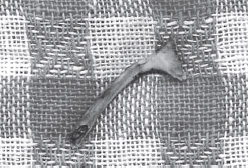
Fig. 3.1. Toadman’s toad bone, Cambridgeshire, England.
THE EIGHT AIRTS

An Ancient Way of Dividing Up the Land
A fourfold conceptual model of existence is found throughout the European tradition. The geomantic division of towns and cities into four quarters (hence the word quarter for a district) is first recorded in the Disciplina Etrusca (Etruscan Discipline), the ancient art of the Augurs of Etruria in Italy in the early years of the first millennium BCE. The Roman surveyors, members of the guild of Agrimensores, used the sixteenfold Disciplina Etrusca for laying out the orientation and groundplans of temples, fortresses, and cities. This was a particular skill that embodied Etruscan spiritual principles, divination, and augury. How far it was known outside expert circles is uncertain. Fourfold divisions of countries, especially islands, are also a tradition. The island of Bornholm in the Baltic traditionally has four distinct regions, or quarters; so do Iceland and Ireland. The four provinces of Ireland—Leinster, Munster, Connacht, and Ulster—are the most anciently recorded example of this ritual division.
In agricultural and seagoing societies, people are always aware of the visible horizon as they observe the apparent motions of sun, moon, and stars in relation to their location. This is the essence of traditional European perception, in which no part is isolated from any other part. The conceptual layout of the land was perceived according to natural measure, which divided the circle of the horizon into four quarters by imaginary lines running north-south and east-west. This division derives from the structure of the human body and the structure of the world. Between these two conceptual lines at right angles, the horizon is divided by further lines in the intercardinal directions. The southern quarter is the quadrant between southwest and southeast; the eastern quarter is between southeast and northeast; the northern sector is between the northeast and the northwest; and finally, the western quadrant is between the northwest and the southwest. These eight directions come from the physical structure of the world we live upon: the north-south polar axis and the east-west one at right angles to it, the plane of the earth’s rotation.
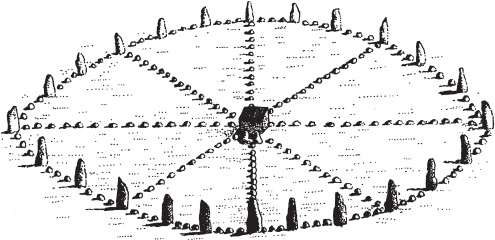
Fig. 3.2. Eightfold stone circle formerly at Solá, Norway.
Recognition of this inherent eightfold division is necessary if one wants to make a square or rectangular structure facing the four quarters of the heavens, such as a traditional building. The four cardinal directions are therefore at the midpoints of the four quarters. The fixed eightfold division of the horizon is a marker of the apparent motions of the celestial bodies, which are cyclic. Depending on latitude, the position of the rising and setting sun at the solstices and at other significant times of the year will be at different places on the horizon relative to the eightfold division. At certain times they will coincide with one or other of the eightfold markers, such as at the equinoxes. These directions played an integral part in traditional ways of life. The traditional reckoning of solar time was used in northern Europe until the arrival of cheap clocks and the imposition of centralized standard time, first by railway companies, then by governments.
TIME AND THE DAY
The word “day” has two different literal meanings. A day can be the period of daylight between sunrise and sunset, as opposed to night. But a day can also mean the period including darkness, the modern 24-hour day (Old Icelandic dœgr), as defined by the calendar, running from midnight to midnight. Two different interpretations of the same word caused confusion when the Christian religion was introduced. Christian time division originated with the early monasteries in Egypt. It was used to govern the times of their daily cycle of prayers. Their “Temporal Hour” system of time-telling divided the day of daylight into twelve equal hours. There was not a serious difference between the length of the day in summer and winter in Egypt at a latitude around 30°. But in northern Europe, between 24° and 36° north of Egypt, the length of difference between summer days and winter days is enormous. In the northern winter the nights are longer than the days, but in summer they are shorter, so in systems dividing daylight into twelve, the hours are significantly longer in summer than they are in winter. In Egypt the difference was negligible, but in Iceland, for instance, where it is light for three common (modern) hours in winter, but twenty-one hours in summer, the church method of day-division was unacceptable. In winter the church temporal hour amounted to fifteen minutes by modern reckoning, and in summer one hour and forty-five minutes. Temporal hours are not a workable system in the north, but they were used by the clergy, who must have understood that the indigenous system was better suited to practical use.
Because of the considerable differences in day length during the year, awareness of the directions was more highly developed and widespread in the north of Europe than in many other parts of the world, for it was a necessary part of survival. The knowledge of the airts (eight directions) was an integral part of the knowledge of farmers, builders, seafarers, warriors, and magicians. The Tides of the Day are an octaval system. Each Tide is not related to the length of daylight, but to a whole cycle of light and dark, the calendar day. There are eight equal divisions for the modern 24-hour period, reckoned as beginning and ending at 7:30 a.m. These Tides are not the same as, nor are they related to, the tides that ebb and flow in the sea. Markers of the Tides are always the same, so sunrise and sunset vary between the Tides. In winter a certain point in a Tide will be in darkness, when in summer at the same point it will be light.
How long daylight lasts varies with the season. The range between the height of the sun at noon on midwinter and noon on midsummer is also notable. The sun rises due east twice a year at the vernal and autumnal equinoxes, that is 6:00 hours in modern clock time, and when it sets due west, it is 18:00. When the sun stands due south at any time of year, it is 12:00 noon, but the height of the sun varies from day to day. The lowest altitude of the sun at noon is at the winter solstice, and its highest altitude is at the midsummer solstice. The visible rising and setting points of sun, moon, and stars are not the same in different places; one must have local knowledge. Between the southernmost rising of the sun at midwinter and the most southerly sunrise at midsummer, the sun rises due east at the equinoxes, crossing the east-west line southward in winter and northward in summer. This defines the two halves of the year, the dark half and the light half. They are dependent upon the latitude at which the observer stands but also depend on the site from which we are viewing them.
From the viewing point of a farmstead or sacred place, these sunrises were marked by a convenient natural feature such as a mountain or by an installed marker (a post, a standing stone, a cairn, or a tree of notable species planted deliberately) at that point. In addition to sunrises at notable times of year, the markers indicate the time of day when the sun stands at any altitude above them. For convenience, houses were built in relation to the cardinal directions, so that the door faced one of the important directions, and anyone going out could view the corresponding marker. Old Icelandic houses had a “house stone” in front of the door on which the observer stood to view the sky. The Althing in Iceland observed the sun’s course, and hence the time, from the law-speaker’s seat (Reuter 1985, 7).
For time-telling, the sun was used by day and the stars by night. The eightfold system could be used for time-telling irrespective of the lay of the land. The height of the horizon above or below our viewing point alters the apparent rising—and setting—places of the celestial bodies. Unless the site has a horizon of equal height all around it, we will not see the celestial bodies rising and setting symmetrically with relation to the cardinal directions. On a level horizon there is an annual solar geometry where the midsummer solstice sunrise is diametrically opposite midwinter sunset, and the winter solstice sunrise is directly opposite midsummer sunset. But such places are rare. At any time of year when the sun is above the horizon, it will always be above the same horizon marker at the same time of day. This is the principle of the sundial.
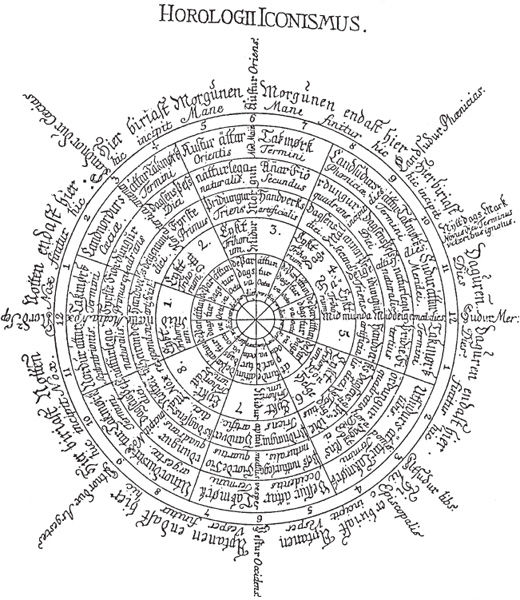
Fig. 3.3. Eightfold wheel of time from Bjornsson’s Rimbegla, Copenhagen, Denmark, 1780. The Library of the European Tradition
Sundials of the Anglo-Saxon era in England are often called “scratch dials,” sexton’s wheels, and mass clocks. Extant sundials are on the oldest surviving buildings, which are invariably churches. The grammarian Ælfric (ca. 950—1021) records that in Anglo-Saxon England there were professional time-tellers called tídsceáware or dægmæl-sceáware. The oldest datable Anglo-Saxon sundials, such as the seventh-century one on Escomb Church in County Durham, divide daylight into four parts. So do the oldest dials in Ireland, on standing stone slabs also dating back to the seventh century CE, such as those at Monasterboice and Kells. Later dials have the traditional eightfold day, sometimes melded with the twelvefold hours of the Christian form of time reckoning. Kirkdale Priory in North Yorkshire, England, has a sundial using this system. It dates to between the years 1056 to 1066. Carved next to it is the Old English text that reads, “This is the day’s sun marker at every Tide.” The eight Tides of the day as observed in Old England, described in the modern 24-hour clock system, are as follows: Morgan, from 4:30 to 7:30; Dæg-Mael, 7:30 to 10:30 (this is the first Tide of the day); Mid-Dæg, 10:30 to 13:30; Ofanverthr Dagr, 13:30 to 16:30; Mid-Aften, 16:30 to 19:30; Ondverth Nott, 19:30 to 21:30; Mid-Niht, 21:30 to 1:30; and Ofanverth Nott, 1:30 to 4:30. In Wales the equivalent Welsh system named the Tides Bore (equivalent to Morgan), Anterth, Nawn, Echwydd, Gwechwydd, Ucher, Dewaint, and Pylgeint.
In the eightfold system the morning mark points are significant in managing the beginning of the working day. Morgan, the morning Tide, begins with the sun at the East-North-East point, 4:30 a.m. local apparent time in the current time system. This point was called rismál, “getting-up time” in Old Norse. Morgan is followed by Dæg-Mael, breakfast time, reckoned as the first Tide of the day. The point of transition between these Tides is a significant horizon marker where the sun stands East-South-East, 7:30 a.m. local apparent time in the current time system, called dagmálastaðr in Iceland. The South-South-West mark point corresponding to 13:30 was called miðmundi, and West-South-West (16:30) eyktarstaðr. In the summer half of the year, eyktarstaðr was the point where the day’s work ended. On the day in autumn when the sun set at eyktarstaðr, this marked the beginning of winter (Reuter 1985, 7).
The eight directions were called ættir (singular: ætt) in Old Norse. More generally, the word means “direction,” for the verb átta means “to orient oneself.” The ættir of the horizon relate to eight periods of time called in Old Norse eyktir, a word apparently linked with the English word “yoke” and the German joch (Reuter 1985, 7).
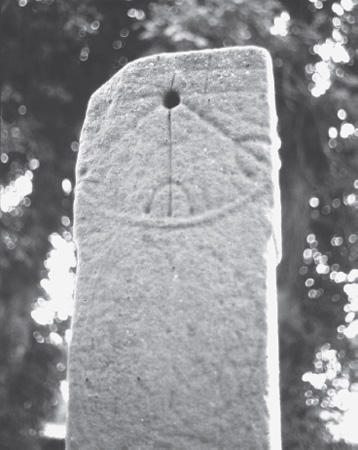
Fig. 3.4. Damaged stone slab with eightfold sundial, Kells, Ireland.
In Scots, airt means “a quarter of the heavens; point of the compass; the direction of the wind” as well as having meanings related to transitive movements in a direction, such as “to point out the way to a place; to direct; to turn in a certain direction . . . to aim at” (Warrack 1988 [1911], 4). Similarly, in modern Irish aird means a direction or a point of the compass. In northeastern England the directions are referred to as the airts, whereas in Lancashire, northwest England, they are haevers (Harland and Wilkinson 1867, 149; Warrack 1988 [1911], 4).
In the integrated culture of the north, ætt equally refers to lineage, family, clan, and house in the sense of an aristocratic ancestral line. These are traditionally related to the place that family or clan originated and lived. The Old Norse ætt is also a group of eight runes in the 24-rune futhark. There is a tradition of the ættar-fylgja, “family fylgja,” which cares for the fortunes of the family and is the property of one or other of the family members. When its owner dies, the fylgja finds a place with another relative, if possible. The properties ascribed to this kind of fylgja appear to have similarities with the belief that particular angels or spirits rule the directions as well as places.
OTHER SYSTEMS OF TIME
The direct observation of the sun from a particular place is the basis of the eight tides of the day. But in northern Europe there have been numerous ways of dividing the day for secular, religious, and magical purposes. The ecclesiastical way of dividing the day was not into eight tides, but divided daylight into twelve equal parts and the night into twelve equal parts. These hours are called Canonical, Temporal, or Unequal Hours. This came into conflict with traditional northern ways of time-telling when Christianity was brought into northern Europe. From about the ninth century, the church had a fixed system of monastic rituals, “canonical offices” that consisted of eight daily prayer events called Lauds, Prime, Terce, Sext, None, Vespers, Compline, and the Night Office or Vigils, divided into a number of sections called Nocturnes. From the 1300s, starting in Italy, the practice of dividing the day into twenty-four hours became widespread in Europe. Magicians used and still use the unequal hours system known as the Planetary Hours.
There are four main systems of time divisions. Horæ ab ortu solis, “hours from the place of the sun,” otherwise called Babylonian Hours or Greek Hours, start with sunrise and end at the following sunrise, dividing the day into twenty-four equal hours. This is also called the “Natural Day” (Tupper 1895, 120). Daylight hours are numbered low. Horæ ab occasu solis, also called Italian, Welsch, or Bohemian Hours, start the hours at sunset and end at sunset, so daylight hours are numbered high. Horæ norimbergenses, Nuremberg Hours, can begin either at sunrise or sunset. Daylight hours are numbered from sunset, as in the Babylonian/ Greek Hours; at sunrise, they are numbered in a new series, as in the Italian/Bohemian system. Horæ communes, known as Common Hours, French Hours, and German Hours, divide the day into two periods of twelve, beginning at midday and midnight, 12:00 noon and 12:00 midnight. This is still the most common means of time-telling, with ante meridiem (a.m.) and post meridiem (p.m.) hours, though the 24-hour clock is used in transport and business to avoid confusion. The medieval sundial and compass makers of Nuremberg called the hours of the 24-hour system Grosse Uhr, “great hours,” and those of the Common Hours, Kleine Uhr, “small hours” (Gouk 1988, 18).
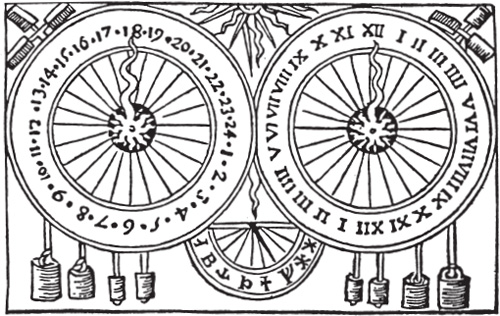
Fig. 3.5. Versions of time division in northern Europe, Olaus Magnus, 1555. The Library of the European Tradition
When they had been abandoned for everyday time-telling, the Unequal Hours system survived in use in magic as the Planetary Hours. This method assigns a particular astrological planet to each hour of the day and night through the week (Agrippa 1993 (1531) II, XXXIV). The time from the sun rising to its setting is divided into twelve and the night from sunset to sunrise also divided into twelve. These are the twelve hours of the day and twelve hours of the night, which of course vary in length continuously as the duration of daylight and darkness lengthen or shorten with the seasons. The first hour of each day is ruled by the lord of that day, so the first hour of Sunday is ruled by the Sun and so on. The seven astrological planets are numbered in their traditional sequence in descending order, as in the nine spheres of traditional cosmology: Saturn, Jupiter, Mars, the Sun, Venus, Mercury, and the Moon. So on a Wednesday, the first planetary hour is Mercury; the second, the Moon; the third, Saturn; and so on. The Wednesday sequence begins again with Mercury at the eighth hour, and the twelfth hour of the day is therefore Mars. The planetary sequence goes on into the twelve hours of the night with the first hour being the Sun. It repeats again at the third hour of the night, when Mercury rules. The last (twelfth) hour of Wednesday night (Thursday morning in modern reckoning) preceding sunrise is therefore Saturn. At sunrise on Thursday, the next planet, Jupiter, rules the first hour. It is an ingenious system, which continuously recycles the seven planets in their proper order, day after day.
Counting the day from sunset was a widespread custom whichever system of hours was in use. The eve of a day counted as the beginning of that day, even though now it is numbered on the preceding calendar day. So May Eve is after sunset on April 30 and in Germany is also known as Walpurgisnacht. Other festivals, such as St. Mark’s Eve, Allhallows’ Eve (Hallowe’en), Christmas Eve, and New Year’s Eve, are all major eves in customary celebration and magical observance. In ancient Ireland, a night (oídhche) was used to measure the days rather than calendar days beginning at midnight. The new day began at sunset, not at sunrise, so that what was called a Monday night would precede the day of Monday, as still used in the eve system. Counting time by nights, not by days, still survives in British English, where a fortnight means two weeks (fourteen nights). The obsolete word sennight (seven nights) was formerly used to describe a week.
Traditional time-telling went into decline when clocks were invented and became generally available. The regular machinery of the clock became the norm by which time was measured. But certain remote places and trades retained traditional time lore long after it had been abandoned in most places in favor of clock time. Places without railways were less affected, as there was no timetable to keep to. In the Faroe Islands the traditional system continued well into the twentieth century, and rural workers improvised methods of time-telling well into the twentieth century.
RULE-OF-THUMB TIME-TELLING
Knowing the directions and gauging the height of the sun were the two important factors of telling the time of day. The directions were common knowledge to all, and the sun’s height could be determined by common objects, the human body, and local knowledge. O. S. Reuter noted that the method for announcing an agreed time to stop work, or any other time needed to be marked, was by the height of the sun rather than its direction. A common measure in medieval Iceland was the shaft height of the sun. This was in the afternoon when the lower edge of the sun appears to rest on the point of a spear set up nine feet from the observer. This was the observer’s own spear, made for him personally according to his physical height. It was set up so that he could still reach comfortably with a shafthand (that is, with the thumb held out from the fist) up to the socket of the spearhead. Because each man’s spear was related to his personal size, this technique gives the same sighting angle for any man using his own weapon. This technique removed the necessity to observe the horizon, using a common weapon as the instrument of measurement (Reuter 1985, 8).
In the preindustrial era, precise times were generally not required.*1 A less rigid schedule was current for everyday needs. In England the day and night were customarily divided into thirteen parts. This “thirteen times of day and night” is a rule-of-thumb way of telling time, practical enough for a life not ruled by the clock (Lawrence 1898, 339):
1. After Midnight
2. Cockcrow
3. Between the first cockcrow and daybreak
4. The Dawn
5. Morning
6. Noon
7. Afternoon
8. Sunset
9. Twilight
10. Evening
11. Candletime
12. Bedtime
13. Dead of night
In the days before mechanical time-telling was readily available, the hours of the day and night were told by the sun by day and by the stars at night. The most basic way to improvise a sundial is to use one’s hand. The hand is held out at head height, palm upward. A small straight stick is held in the crook of the thumb at the angle of the latitude, determined by the angle of shadows at noon. The stick becomes a shadow-casting gnomon. Before noon it is held in the left hand, pointed toward the west; after noon, in the right hand, oriented to the east. The shadow cast by the stick shows the time by the position of its shadow against the joints of the fingers and the fingertips.
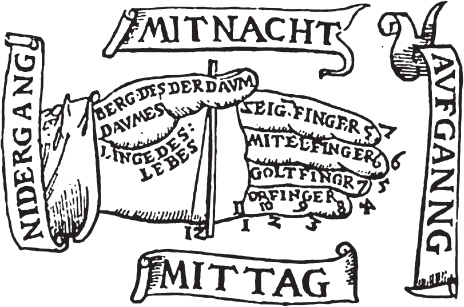
Fig. 3.6. Shepherd’s hand sundial, Germany, sixteenth century. The Library of the European Tradition
More substantial temporary turf dials, otherwise known as “shepherds’ dials” or “witches’ dials” are known to have been made by herdsmen in the rural parts of southern England. The practice was discontinued gradually, and by the beginning of the twentieth century, they were used only in Kent, Surrey, Sussex, and Essex. They seem to have gone out of use completely during World War I. Shepherds used the dials to tell them when it was time to move the sheep from the grazing land to get them to the sheepfold before sunset.
The basic shepherd’s dial was made by cutting a circle in the turf about 18 inches (460 mm) in diameter. Then a straight stick about a foot long (305 mm) was pushed vertically into the ground at the center of the circle. North of the vertical stick, another stick, notched to mark the hours, was laid east-west inside the circle at right angles to a north-south line. Each end touched the circle. Having an intimate knowledge of the land on which they worked every day, herdsmen knew what distant landmark, or “farthest beacon” marked north. The stick at the center was the gnomon that cast a shadow upon the notched stick. The hour was indicated where the shadow touched a notch. Some shepherds dispensed with a notched stick and made small ridges in the earth to mark the hours. There is no one way of doing things traditionally, so others made a different dial that was a reversal of the principle of the dial just described. It started with the circle, but a shorter stick was stuck in the center. Into the perimeter of the circle, another stick a foot long was put in the ground, due south of the first stick. More sticks were stuck into the circle at appropriate distances for the hours or tides relative to the first stick. Traditionally, seven sticks were used. All had the function of gnomons, casting shadows across the central stick, which was the marker of the hours (Gossett 1911).
These traditional methods were in use until the availability of cheap clocks and watches, and the imposition of standardized time in time zones, delocalized time-telling. The need to have the same clock time at different places, rather than the sun-determined local apparent time, so that trains could run safely, led railway companies to standardize their clocks at a main station. Later, government edicts enforced railway time on whole countries. The concept of legal time was created, where the official mean time and later “daylight saving time” determined by central government became the everyday reality. People were forced to use government-defined time rather than the natural real time told from the sun, which thereafter was ignored. After that, ancient traditional methods continued to be used by only a very few people, such as traditional astrologers and practitioners of magic. Almost everywhere on Earth now, real local apparent time is different from official clock time. It is a subtle dislocation whose effects on the human body are ignored.
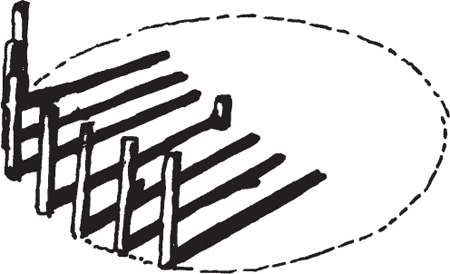
Fig. 3.7. Southern English shepherd’s dial.
THE WEEK AND ITS DAYS
The earliest recorded continuously cycling seven-day week was in use among the Hebrews from the fifth century BCE. The Sabbath was the named day, while the others were numbered (Green 1998, 236). The week was transmitted outside Judaism by Greek-speaking Jews, and by the second century BCE the planetary names were being used: Zeus, Thursday; Aphrodite, Friday; Kronos, Saturday; Helios, Sunday; Selene, Monday; Ares, Tuesday; and Hermes, Wednesday (Green 1998, 237—38). Naming the days of the week expresses the magical theory that the particular virtues and powers of each planet are strongest on the day dedicated to them. From the Greeks the week went into the Roman Empire, where the days were named for the Roman gods: Jupiter for Thursday, Venus for Friday, Saturn for Saturday, Sol for Sunday, Luna for Monday, Mars for Tuesday, and Mercury for Wednesday. Use of the seven-day week traveled beyond the borders of the Roman Empire, and the day names were again reconfigured by the interpretatio Germanica with the names of the northern gods. In the same period Christian apologists, including Augustine, Philastrius, and Caesarius of Arles, preached that it was sacrilege to use the Pagan names of the weekdays and recommended using numbered days instead. Their recommendations were not followed. In Anglo-Saxon England, for example, the day names became Tíwesdæg, Tuesday, named for Tíw (the English god corresponding to the older Germanic Tîwaz); Wódnesdæg, Wednesday, for Woden; Þunresdæg, Thursday, for Þunor; and Frigedæg, Friday, for Frigga. Saturday appears as a direct import without a significant deity, as the god Sæter or Satern is not among the main gods and goddesses. Sunnandæg and Mónandæg, Sunday and Monday, are named directly for the sun and the moon. The simple references to the sun and moon reflect the absence of solar and lunar deities in Germanic religion, in contrast with the Graeco-Roman pantheon.
The particular virtues and powers ascribed to each planet are embedded in traditional lore of good and bad days to do things. Each day had a specific quality that enhanced particular tasks and hindered others. Certain kinds of magic performed best on certain days of the week. All over Europe are folk sayings that describe what one must and must not do on a particular day. Because the church adopted Sunday as its holy day, most prohibitions referred to this day. At many times and places, laws prevented business from being conducted on a Sunday. An Irish example will give a flavor of weekday beliefs. In 1887 Lady Wilde wrote that people believed the strength of the fairies’ malevolent powers were dependent on the day of the week, “The first days of the year and of the week [Sunday] are the luckiest. Never begin a journey on a Friday or Saturday, nor move from your residence, nor change a situation. Never cut out a dress or begin to make it on a Friday, nor fix a marriage, for of all days the fairies have the most malefic power on a Friday” (Wilde 1887, II, 116).
EGYPTIAN DAYS
Good and bad days known as “Egyptian Days” or “The Dangerous Days in the Year” appear in a number of medieval magical and medical texts. The medieval Welsh book of the Physicians of Myddfai solemnly explains:
Sound teachers have discovered and written as follows, namely, that thirty-two days in the year are dangerous. Know that whosoever is born on one of those days, will not live long, and whosoever is married on one of them, will die ere long, or will only exist in pain and poverty. And whosoever shall begin business on one of them, will not complete it satisfactorily. (Pughe and Williams 1861, §93, 58)
There is no general concurrence of the actual Egyptian Days in published texts. For example, Myddfai has totally different days from those listed in the Icelandic Galdrabók. An Icelandic list of Egyptian Days in the Galdrabók gives two bad luck days in each month (Flowers 1989, 67), while the Myddfai list has between one and four bad days per month (Pughe and Williams 1861, §93, 58). So in February, Galdrabók warns of the 3rd and the 4th, while Myddfai lists three: the 16th, 17th, and 18th. For May, Galdrabók has the 3rd and the 7th, while Myddfai lists four: the 15th, 16th, 17th, and 20th. For October, Galdrabók has the 3rd and the 10th, while Myddfai has only one, the 6th. Again, different combinations of bad days appear in a Swedish runic calendar of 1710, published in 1895, February having the 11th, 17th, 18th, and 19th, and May the 7th. It concurs with Myddfai in October with the 6th being the one bad day (Simpson 1895, 236).
These days clearly had an origin in various dire events, but by the time they were promoted in books, their origins were forgotten, and they were no more than superstition, handed on through practical observance and in respected texts. An indication of their origin comes from H. C. Agrippa in his Three Books of Occult Philosophy (1531). Agrippa notes that Penitential or Black Days originated as days when the commonwealth suffered some notable blow. For example, the Romans commemorated the day before the fourth Nones of August because it was the day they suffered heavy defeat by the forces of Hannibal at the Battle of Cannae in 216 BCE. In Jewish tradition June 17 and July 9 are Black Days: the first date was said to be when Moses broke the tables of the law, and Manasseh set up an image; the second date was when both temples of Jerusalem were destroyed (Agrippa 1993 [1531], III, LXIII, 670). They were called Egyptian Days, Agrippa tells us, because in ancient times the Egyptians observed days when bad things had happened, and subsequently every nation took up the practice to commemorate their own national setbacks. In modern times 9/11 is the most recognized of these days. By definition historic lists of Egyptian Days must vary from country to country, hence the lack of consistency.
RUNIC CALENDARS
Runes may have been used in calendars and almanacs in pre-Christian times, as there was always a need for some means of recording the passing of time. In Iceland in 1639, an edict of the church labeled the use of runes as witchcraft. Árni Pétursson was burnt to death in the presence of the Icelandic Althing in 1681 because he had used runic magical formulae. But at the same time, the runes were in everyday use in Scandinavia and Estonia in calendars and almanacs carved on wooden staves. The runic perpetual calendar was called a clog almanac in England, primstav in Norway, rimstock in Denmark, and runstaf in Sweden. Their notation was based upon the Roman calendar enacted by Julius Caesar in 46 BCE. This Julian Calendar became progressively more inaccurate, until it was replaced in 1582 by Pope Gregory XIII and the current Gregorian Calendar came into being.
J. Barnard Davis noted in 1867 that there were two kinds of northern almanacs carved on wood and other materials: the more ancient Runic Calendars, inscribed with runes; and the less ancient, runeless calendars, the Staffordshire clog almanacs.
They were the Primstaves of the Norwegians, so named from the new moon, prima luna, or from the Prime, or Golden Number engraved on them; and Rimstocks by the Danes, from the Icelandic and Anglo-Saxon word Rim, a calendar, and Stock, a staff or stick . . . they were mostly made of wood (treen), but far from exclusively so. Some were of horn or bone . . . and some were inscribed on parchment; the wood itself differed in different examples. Many were of oak, some of box, some of pear tree, some of lime, and so on. Many were constructed in the form of a sword or sabre, or a long staff or baton; all, emblems of power in the hands of priests and rulers. Some of these staves were hexagonal in form . . . more were rectangular; some prismatic staves. Others of these calendars were of tongue-shaped leaves united at one end by an iron pin riveted in, just in the shape and manner of a fan. Another series is formed of thin tablets of wood, each of which has two holes pierced through it, one near either extremity, so that two thongs may be passed through all the laminæ; and when these are tied the instrument closely resembles a modern book. (Davis 1867, 458—59)
These almanacs could also be in the form of a ring. The messedag (Mass-day) staff shown in figure 3.8 was depicted in a Norwegian almanac (Norske Folke-Kalender) for 1848 (Davis 1867, 471).
The essentially Christian calendar on the runic almanacs carried on the church’s complex computations of the date of Easter, depending upon interactions between the vernal equinox and the full moon. The common runic calendar contained seven recurring letters that were the first seven runes of the futhark and another nineteen that indicated the Golden Number cycle. Printed runic almanacs were produced in Sweden until the middle of the eighteenth century. The runes finally went out of use as a practical almanac in Estonia in 1921, when the Julian Calendar was finally abolished, and the Gregorian one, already used everywhere else, replaced it. The printed page illustrated here is from the work by Doctor Plot, The Natural History of Staffordshire, 1686, where he compared the English clog almanacks with the Swedish runstaf and gave the numbers for the runes and their names. A woodcut in the second volume of Olof Rudbeck’s Atlantica (1702) depicts a mid-seventeenth-century runic calendar from Österbotten “På bräde uti en Treefootz lijkness,” in the likeness of a treefoot. The threefold year of the northern tradition marked by Vintersblót (Winter’s Day, October 14), Midvintersblót (Midwinter’s Day, January 13) and Sommarsblót (Summer’s Day, April 14), fits this form admirably. Winter’s Day and Summer’s Day were marked on Estonian runic calendars until 1921.
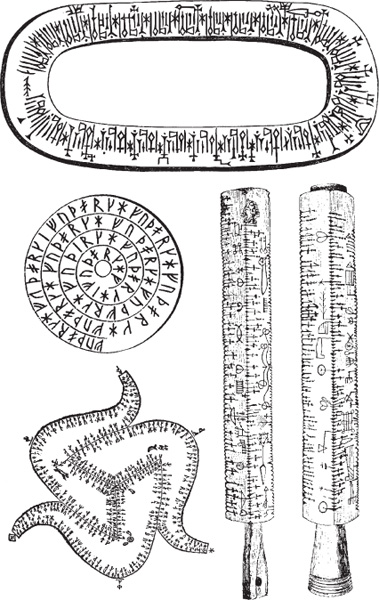
Fig. 3.8. Runic Almanacs. The Library of the European Tradition
Two-sided almanacs were divided on one side from January 1 to July 1 and the other side from July 2 to December 31. They could be read from left to right or right to left. Four-sided almanacs were divided from January 1 to April 3; April 4 to July 1; July 2 to October 12; and October 13 to December 31. Unlucky or “Egyptian” days were marked on some almanacs. Mark days on runic almanacs included days from pre-Christian and Christian systems. This list compiles significant mark days from various runic almanacs with their varied signs (Harland 1865, 126—30; Davis 1867, 468—70; Simpson 1895, 236—40; Schnippel 1926, 39—106; Pennick 2001, passim).
January 1, New Year’s Day; Kalends of January: a circle
January 6, Epiphany; Twelfth Night: a star, three circles or crowns for the Three Kings
January 13, Tiugunde Day (20th day after Yule); Ides of January; Midvintersblót: inverted horn
January 25, St. Paul; Old Disting (Dísarblót, festival of the Dísir): sword, ax
February 2, Candlemas: threefold branch
February 3, St. Blaise: binding knot
February 14, St. Valentine: true-love knot
February 24, St. Matthias: fish (commencement of the fishing season), feather
March 1, St. David; Foe-ing Out Day (spring cleaning, magical cleansing): harp, binding-pattern
March 25, Annunciation (Lady Day): threefold branch
April 14, Summer’s Day, Sommarsblót: leafy bush
April 23, St. George: a sword, spear
April 25, St. Mark’s Day: cuckoo (“St. Mark’s Gowk”), cross in circle
May 1, May: stylized May tree
May 3, Holy Cross Day: cross
June 11, St. Barnabas: haymaking rake
June 24, St. John the Baptist: sun, ax
July 10, St. Knut: scythe
July 29, St. Olaf: ax
August 10, St. Lawrence: grid
September 14, Exaltation of the Holy Cross: a cross
September 21, St. Matthew: stag, carpenter’s square
September 29, Michaelmas: horn, steelyard, pair of scales
October 14, Winter’s Day; Vintersblót: pine tree
October 28, St. Simon and St. Jude; Fyribod (forebode, the onset of winter): knot
November 1, All Saints; Hallowmass; Helgerne; Kalends of November: circle, binding knot
November 11, Martinmas; Old November Day: ax, goose
November 23, St. Clement: anchor, pincers (blacksmith’s)
November 30, St. Andrew: saltire
December 13, St. Lucy; Ides of December: branches of light
December 21, Yule; St. Thomas; Midwinter: hand, spearhead
December 25, Christmas: semicircle on a straight stroke, drinking (wassail) horn